Guides · Story
GTA6 vs GTA5 Graphics Compared: From Enhanced Edition to a Generational Leap
Since its 2013 launch, GTA5 has gone through multiple remasters and enhancements, and even now, with ray tracing added to the Enhanced Edition on PC and current-gen consoles, its visuals remain competitive. GTA6, by contrast, was built specifically for PS5 and Xbox Series X|S, and technical outlets such as Digital Foundry have rated it extremely highly, calling it “one of the most impressive showcases of real-time rendering to date.” Below is a comparison of the two games’ visuals across several dimensions.

On this page
Since its 2013 launch, GTA5 has gone through multiple remasters and enhancements, and even now, with ray tracing added to the Enhanced Edition on PC and current-gen consoles, its visuals remain competitive. GTA6, by contrast, was built specifically for PS5 and Xbox Series X|S, and technical outlets such as Digital Foundry have rated it extremely highly, calling it “one of the most impressive showcases of real-time rendering to date.” Below is a comparison of the two games’ visuals across several dimensions.
Character Models and Materials
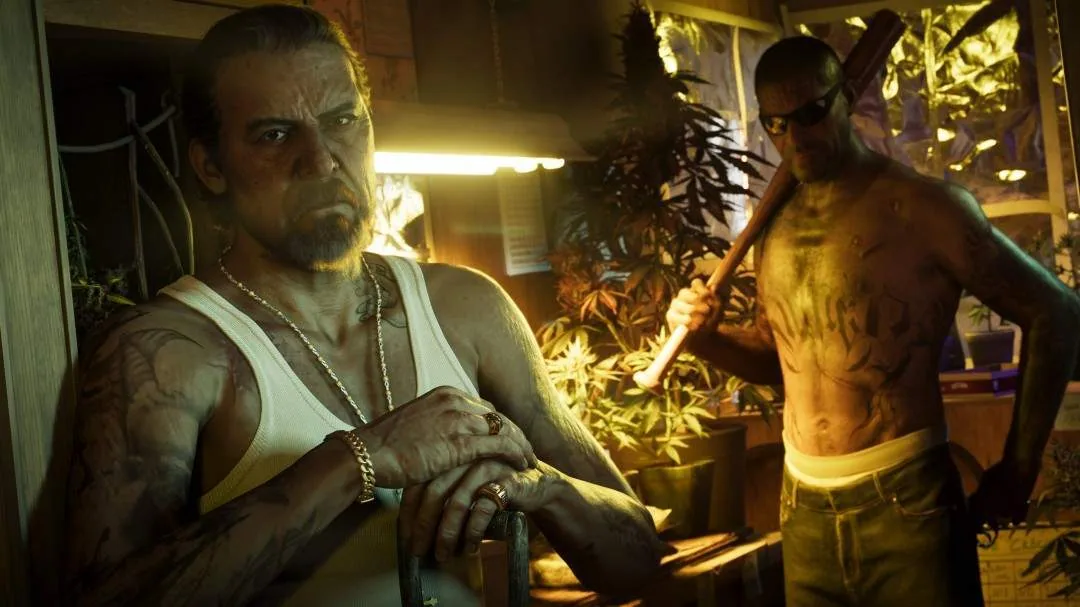
GTA5: Even in the Enhanced Edition, character skin still looks somewhat waxy, relying on normal maps for detail, with limited subsurface scattering. Hair is mostly rendered as solid blocks, lacking individual strands.
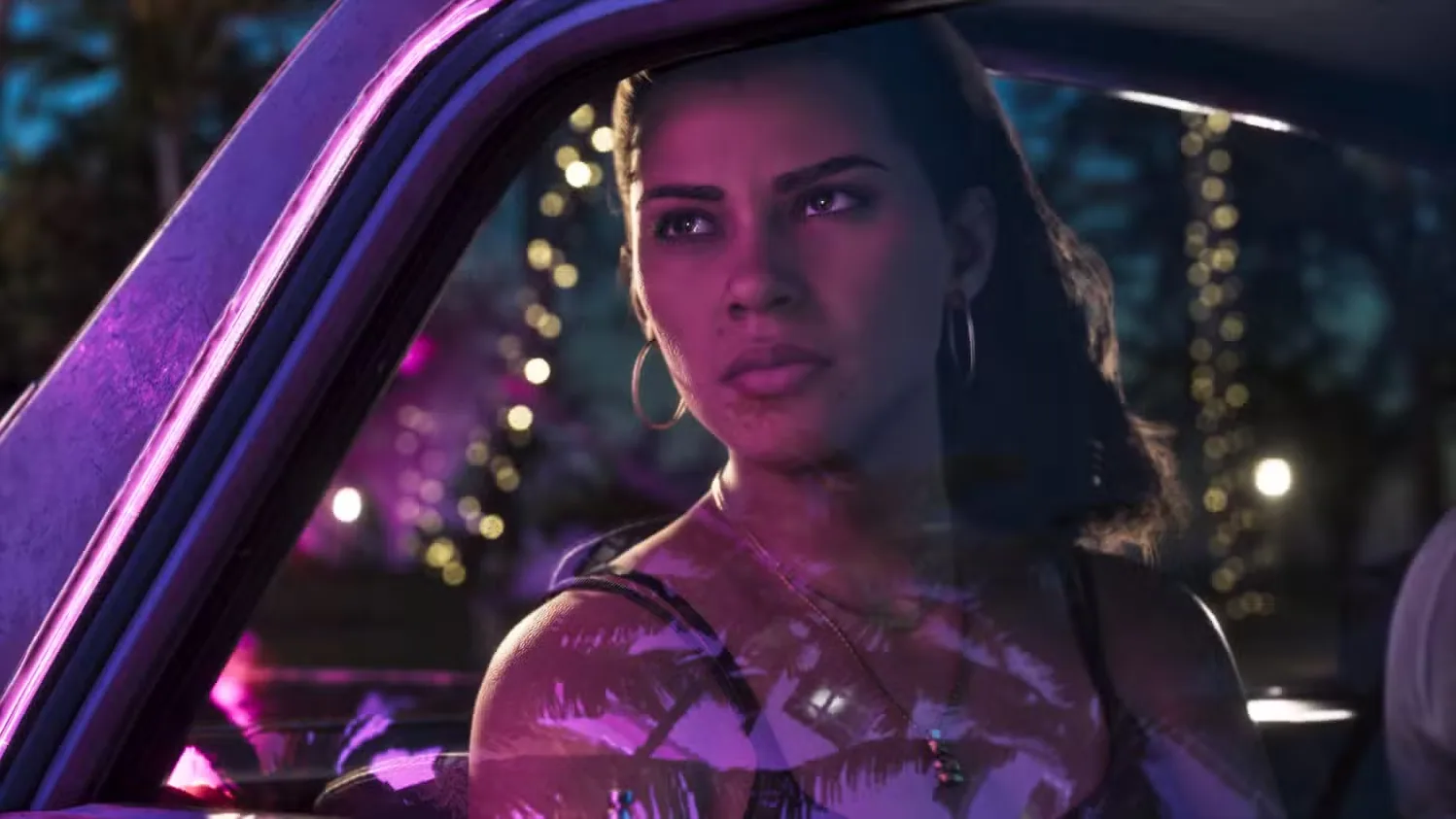
GTA6: Character rendering marks a generational leap. Skin has excellent diffuse and specular response, capturing subtle shifts in expression and the sheen of sweat. Clothing uses a modern PBR workflow, with more natural fabric creases and dynamic follow-through. Hair is rendered strand by strand, and even ordinary NPCs show convincing light transport and secondary motion; long hair swaying in the wind stands out in particular.
Lighting and Ray Tracing
Both games use ray tracing, but the depth of the implementation differs.
GTA5 Enhanced: It introduces high-quality ray-traced reflections and RTGI (ray-traced global illumination), producing convincing indirect light and shadows. But because the underlying assets were not authored with a PBR workflow, material roughness varies too little, and reflections can look uniform and less than realistic.
GTA6: Built on a modern PBR pipeline from scratch, every surface (dust, concrete, metal, wet asphalt) reacts to light more accurately. RT reflections are used widely across opaque and transparent surfaces and can even correctly reflect objects that are off-screen. RTGI looks more natural, with ambient light bounces that respect occlusion and color bleed, giving interiors and exteriors alike a “lived-in” feel. Shadows rely mainly on high-quality shadow maps with variable penumbra, striking a balance between performance and quality.
Environment and World Density
GTA5: Los Santos was a density benchmark at the time, but distant detail and LOD transitions still leave visible seams.
GTA6: There is almost no noticeable LOD pop-in in the world rendering. The number of vehicles and NPCs increases markedly, and detail density is higher for buildings, street furniture, power lines and signage. Water stands out especially, with more realistic ripples, reflections and foam interaction. Ray-traced reflections on wet roads and standing water became one of the visual highlights of the trailers.

Performance and Resolution
Analysis of the Extended Look shows GTA6 running at roughly native 1440p on PS5 and upscaling to 4K, with the frame rate locked at a steady 30FPS. Digital Foundry notes that its frame-time consistency is better than the launch version of its predecessor. A 60FPS mode may exist, but it would require deep cuts to features such as the scope of ray tracing or NPC density, and Rockstar currently prioritizes visual integrity.
By comparison, GTA5 Enhanced can easily reach higher frame rates and resolutions on high-end PCs, but its core assets and material systems are still bound to a 2013 design foundation.
Summary Comparison Table
| Category | GTA5 Enhanced | GTA6 |
|---|---|---|
| Character Skin / Hair | Waxy look, blocky hair | High-fidelity skin + strand-level rendering |
| Material Pipeline | Mostly non-PBR | Fully modern PBR |
| Ray-Traced Reflections | High quality, but limited by materials | Extensive and accurate, supports off-screen objects |
| Global Illumination | RTGI effective | RTGI more natural and more consistent |
| World Density | High | Significantly higher, almost no LOD pop-in |
| Target Platforms | Multiple console generations + PC | Designed for current-gen consoles |

Conclusion
GTA5 Enhanced reached surprising heights through post-launch technical patches, but GTA6 is a next-gen title rebuilt from the ground up. Characters, materials, lighting and world density together make up the generational gap. Even locked at 30FPS, its visual completeness and consistency have impressed many technical observers. The real difference will become fully apparent when players get their hands on it on November 19, 2026.