Guides · Crime & Wanted
From Corner Stores to Big Banks: How GTA6's Heists Make Every Score Feel Real
In GTA5, robbery was a contained thing. You worked through preset missions by the script: case the joint, pick an approach, choose your crew, take your cut, with Rockstar spelling out every step. The most free roam let you do was walk into a convenience store, point a gun at the clerk, and watch the money drift into your pocket on its own. Robbery was a mission, not a mechanic.

On this page
In GTA5, robbery was a contained thing. You worked through preset missions by the script: case the joint, pick an approach, choose your crew, take your cut, with Rockstar spelling out every step. The most free roam let you do was walk into a convenience store, point a gun at the clerk, and watch the money drift into your pocket on its own. Robbery was a mission, not a mechanic.
GTA6 sets out to change that. Rockstar North co-head Rob Nelson said in an interview that heists in the new game are woven deep into the open world and run as a core loop through the entire experience. You don’t have to wait for a mission marker to appear on the map before you can act. You walk into a store, decide to rob it, and it happens.
Five Tiers: From a Few Grand to a Life-Changing Score
Free-roam robberies in GTA6 are split into five tiers. At the bottom are local stores: convenience stores, pawn shops, phone repair shops, gas stations and payday loan outlets. These targets usually carry no map icon and pay only a few thousand dollars, but they’re low-risk and easy to hit, which makes them a quick score when you’re short on cash. One tier up are cash trucks and armored cars, classed as small jobs, and they take real firepower and speed to pull off. The third tier is jewelry stores, where the payouts start to look serious. In the press demo, players spotted a jewelry store safe holding anywhere from $15,000 to $40,000. The fourth tier is banks, the real money, but the complexity climbs sharply: you need the safe combination, possibly several accomplices, and the police response is far faster and heavier than on a small robbery. The top tier covers gang hideouts and crime dens, the biggest risk with the biggest payoff, and one of those hideouts is even Ultimate Edition-exclusive content.
The higher the tier, the more the map tells you. Jewelry stores and banks mark estimated payouts on the map, so you know before you move whether a score is worth the gamble. Lower-tier robberies never appear on the map at all. You have to watch the streets yourself, listen in on NPC chatter, and pick up leads from a fence’s text messages.
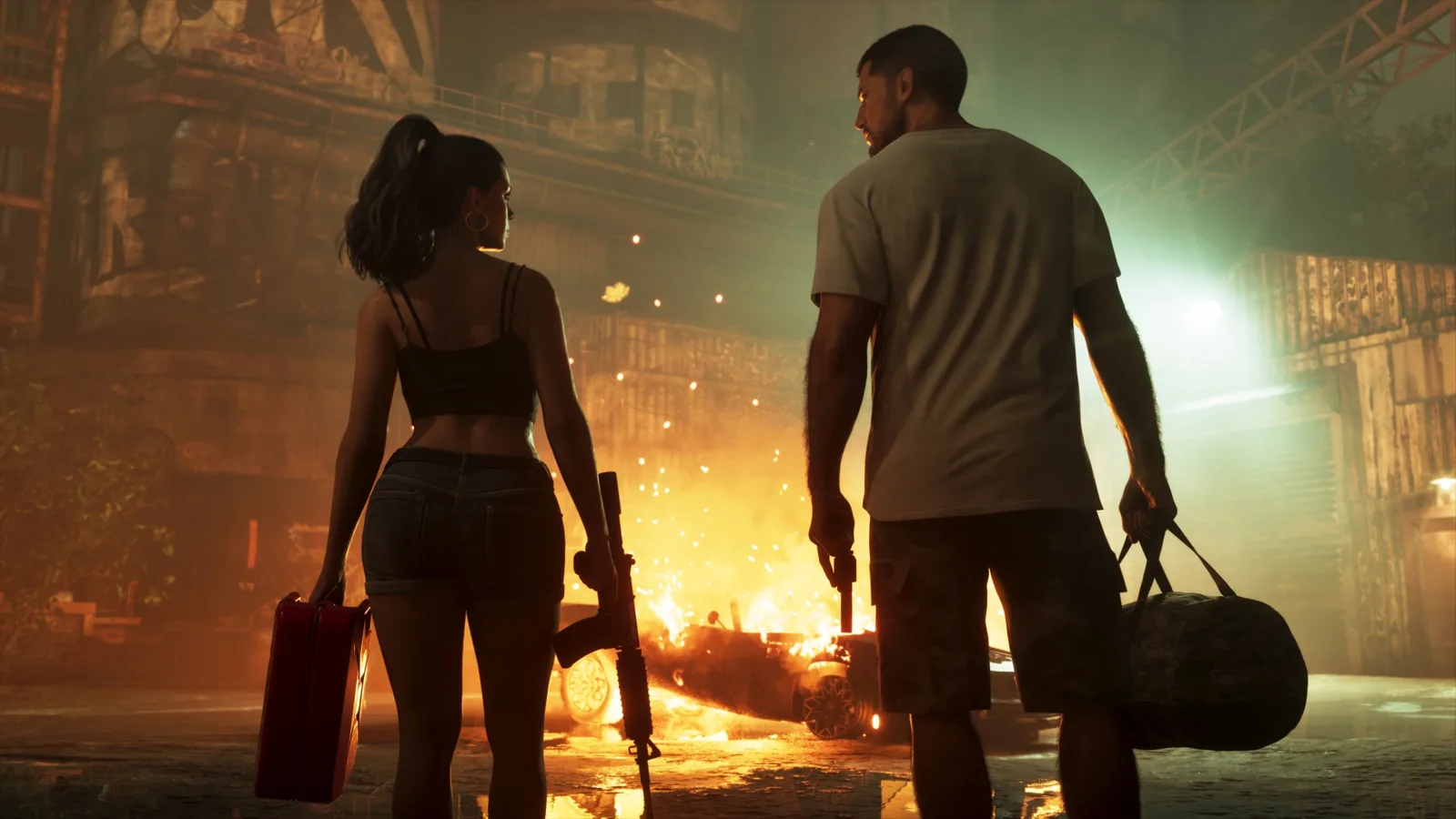
Preparation Decides Everything
Before a robbery, you can enter a planning phase. Take the jewelry store job: the flow breaks into clear steps. First you scout the target and gather intel, then you organize what you know on the planning board, then you choose an approach, all-out assault or stealth infiltration. Go stealth and you need to find a back door, disable the cameras and avoid the guards’ patrol routes. Go loud and you need enough firepower and a clean way out.
Environmental scanning plays a key role in the prep phase. Jason can use it to assess threats and tag cameras, guards and entry points, giving him a full picture of the site before anyone moves. You can also give your partner real-time orders: one of you holds the register and the hostages, the other watches the door and the street, ready for whatever goes wrong.
Two Characters, Two Playstyles
Jason and Lucia aren’t interchangeable leads with new skins. According to leaked gameplay, their roles in a robbery are designed to be completely different. Lucia is the infiltrator, built for hacking systems, picking locks and disarming security, the one who opens a quiet way in. Jason is the firepower, handling suppression, driving and cover, the one who shoots you out when things go bad.
A robbery runs from planning to payout in five stages: planning, entry, taking the loot, escape and the split. Every stage divides the two characters’ duties clearly. Lucia maps the route and the hack while Jason picks the weapons and the vehicle. Lucia slips in and kills the cameras while Jason makes noise on the perimeter. Lucia cracks the safe while Jason holds cover and watches the clock. Lucia wipes the evidence and blocks pursuit while Jason drives the cops off your tail. The division isn’t fixed either. If the situation calls for it, the two can swap roles mid-robbery.
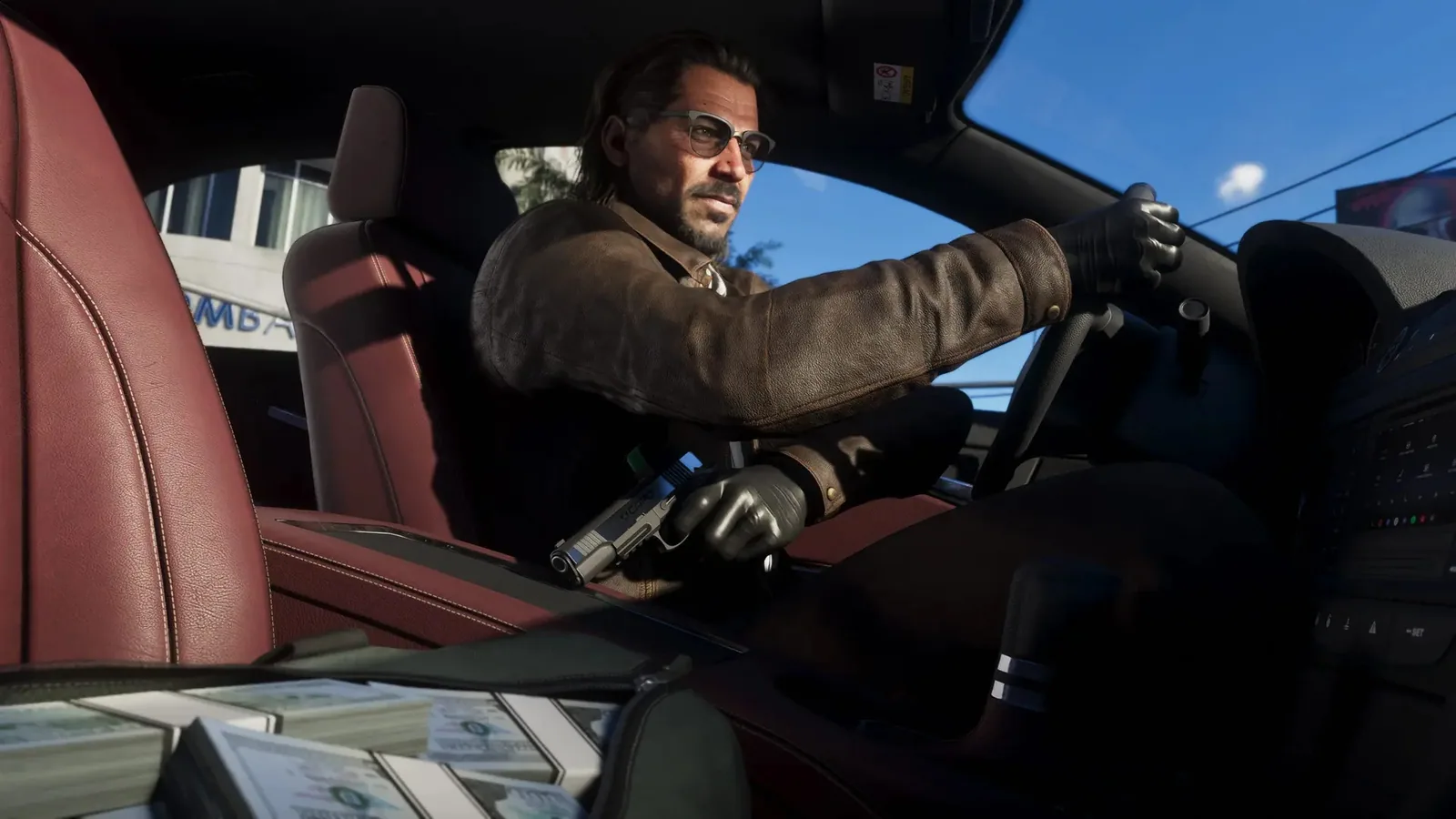
After the Score, the Real Trouble Starts
A robbery in GTA6 isn’t over when you get the money. The cash you take and the loot you take are two different things. Cash is lost outright if you die before it goes into an ATM. Loot has to be converted through a dedicated fence: cars, jewelry and drugs each move through their own channels, and those fences have to be unlocked by pushing the story forward. Rob a pile of jewelry without knowing a jewelry fence and all you’re carrying is dead weight in your bag.
Police pursuit is far more involved than in previous games too. A crime only brings the cops out once it’s been witnessed or reported, but once they respond they build a case file on you from surveillance footage, witness descriptions, vehicle trackers and more. Icons below the wanted stars in the HUD show what the police have on you: a silhouette for your appearance, a coat hanger for your clothing, a camera for surveillance footage. You have to change clothes, switch cars, destroy camera footage, and even split Jason and Lucia up to erase that evidence one piece at a time.
What makes GTA6’s robbery system interesting is that it turns crime from a scripted cutscene into something you genuinely have to worry about. Planning, execution, cleanup, every stage is a choice and every choice has consequences. In Leonida, a robbery isn’t a button press that ends with money in your account. It’s a business you have to take seriously.